

How Long Does It Take for Semaglutide GLP-1 to Suppress Appetite?
Semaglutide GLP‑1 begins to show appetite‑suppressing effects within a few days, but its full impact typically takes 4 to 6 weeks to become noticeable. As the medication builds up in your system, it gradually reduces hunger and food cravings, supporting healthier eating habits. For personalized guidance and optimal results, consult Dr. Ria Shirsolkar, MD, MS, at Stone Ridge Wellness and Aesthetics, who will monitor your progress and adjust your plan accordingly. For more information, contact us or request an appointment online. We are conveniently located at 24560 Southpoint Dr, Suite 220 Aldie, VA 20105.

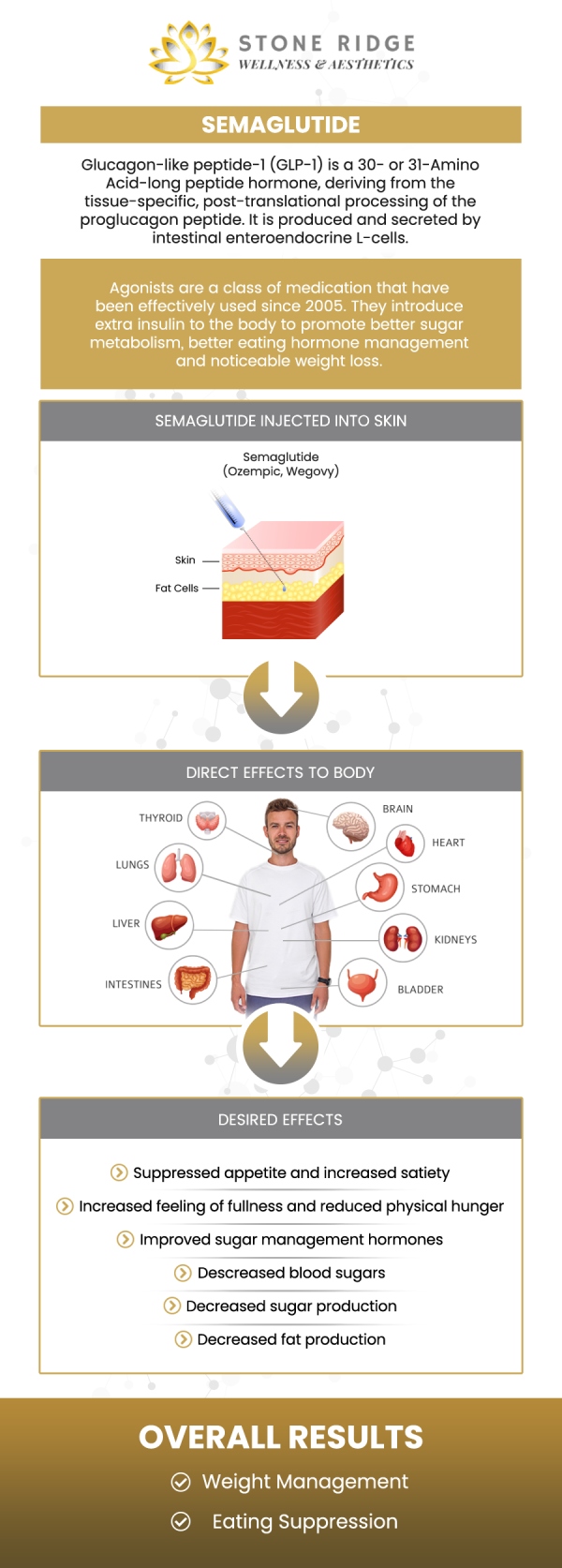
Table of Contents:
How does Semaglutide GLP‑1 help control appetite and food cravings?
Does appetite suppression increase as the Semaglutide GLP‑1 dosage gradually increases?
Can appetite changes vary from person to person when using Semaglutide GLP‑1?
What factors influence how quickly Semaglutide GLP‑1 reduces appetite?
How long does the appetite‑suppressing effect of Semaglutide GLP‑1 typically last?
Understanding Appetite Suppression with Semaglutide GLP‑1 by Dr. Ria Shirsolkar at Stone Ridge Wellness and Aesthetics
Semaglutide GLP‑1 helps regulate appetite by mimicking a hormone naturally produced in the gut called glucagon‑like peptide‑1 (GLP‑1). After injection, it activates receptors in the brain that influence hunger and satiety, helping you feel full sooner and reducing the urge to overeat. This mechanism supports healthier eating patterns by slowing gastric emptying — the rate at which food leaves your stomach — and reinforcing signals that tell your brain you are satisfied. For many patients, this leads to fewer intense food cravings and a noticeable shift in how often and how much they feel compelled to eat.
Rather than suppressing hunger abruptly, Semaglutide GLP‑1 works gradually as it becomes established in your system. In early weeks, you may notice subtle changes, like feeling satisfied with smaller portions or thinking less about snacking. Over time, these small differences can accumulate into meaningful improvements in appetite control, making it easier to adhere to dietary goals.
At Stone Ridge Wellness and Aesthetics, our approach also encourages mindful eating and supportive lifestyle strategies. Combining medication with balanced nutrition, hydration, and stress management increases the likelihood of long‑term success, helping you achieve both appetite control and overall wellness.
Yes — appetite suppression often becomes more noticeable as your Semaglutide GLP‑1 dosage is gradually increased. Medical providers typically start patients on a lower dose to help the body adjust and reduce the risk of side effects. Over several weeks, the dose is gradually raised according to your treatment plan. With each step up, many individuals report stronger appetite regulation and reduced cravings.
This pattern happens because higher doses lead to more consistent activation of GLP‑1 receptors in the brain and digestive system. As the receptors receive greater stimulation, signals that promote feelings of fullness and satisfaction become more effective. As a result, you may notice that you feel comfortably full sooner during meals and think less frequently about food between meals.
It’s important to underline that everyone’s response varies. Some patients experience significant appetite reduction at lower doses, while others may require higher doses before noticing a marked difference. Your care team at Stone Ridge Wellness and Aesthetics, led by experienced clinicians, monitors your response at each stage. By adjusting your dose based on how you’re feeling and progressing toward your goals, your provider can help you find the optimal balance between appetite control and overall comfort throughout your treatment.
Absolutely — appetite changes can vary widely from person to person when using Semaglutide GLP‑1. Individual responses depend on a combination of biological, lifestyle, and behavioral factors. While one patient may notice a significant reduction in hunger and cravings within a few weeks, another may experience more gradual changes over a longer period.
Genetics and metabolism play a key role. Each body interacts with hormones and medications differently, meaning the way your brain and digestive system respond to Semaglutide GLP‑1 may differ from someone else’s experience. Additionally, factors like baseline appetite, eating habits, stress levels, sleep quality, and overall nutrition influence how quickly and strongly appetite suppression is felt.
Lifestyle factors also matter. Individuals who implement supportive practices — like regular balanced meals, adequate hydration, and mindful eating — often experience smoother transitions in appetite regulation. Conversely, those with irregular eating patterns or higher stress levels may notice more variability in how appetite changes over time.
At Stone Ridge Wellness and Aesthetics, we recognize that no two patients are the same. That’s why your treatment plan is personalized and adjusted based on your unique experience. Regular follow‑up appointments allow your provider to assess your response and fine‑tune your approach to help you reach your wellness goals effectively.
Several factors influence how quickly Semaglutide GLP‑1 reduces appetite, making the timeline for noticeable changes unique to each individual. One of the primary determinants is dosage progression. Because providers typically start with a lower dose and increase it gradually to enhance tolerability, the appetite‑suppressing effects may not peak until higher doses are reached.
Your metabolism and body chemistry also matter. People with faster metabolic rates or greater sensitivity to GLP‑1 hormone signaling may notice appetite changes sooner. In contrast, individuals whose bodies require more time to adjust to hormonal fluctuations may experience a slower onset of appetite suppression.
Lifestyle factors — such as diet quality, meal timing, stress levels, and sleep patterns — play a significant role. A balanced diet rich in protein and fiber, consistent hydration, and well‑regulated sleep can support appetite control and enhance Semaglutide GLP‑1’s effects. Conversely, high stress, irregular eating habits, or poor sleep may dampen or delay these changes.
Lastly, behavioral and psychological components influence how hunger and cravings are perceived. Mindful eating practices and addressing emotional eating can amplify the medication’s impact by changing how you respond to internal hunger cues.
Your provider at Stone Ridge Wellness and Aesthetics will assess these individual factors during follow‑up visits, helping tailor your treatment plan so that it best supports your body and lifestyle.
The appetite‑suppressing effect of Semaglutide GLP‑1 typically lasts throughout its weekly dosing cycle, making it a long‑acting option for appetite regulation. Semaglutide has a prolonged half‑life, meaning that once steady levels are achieved in your system, the effects can persist for a full seven days after each injection. This sustained activity supports appetite control between weekly doses, helping many patients feel fuller longer and reduce frequent cravings.
That said, the strength of appetite suppression may vary slightly as the medication level in your bloodstream rises after an injection and then gradually decreases toward the end of the week. For some individuals, hunger may feel more controlled in the days following a dose and slightly more noticeable before the next scheduled injection — a pattern that varies from person to person.
Over time, as your body adapts to consistent weekly dosing and dosage adjustments reach the optimal therapeutic level, many patients experience more stable appetite regulation. The consistency of weekly administration helps maintain a balanced hormonal influence on hunger and satiety.
At Stone Ridge Wellness and Aesthetics, your provider will help you understand how your body responds to each dose and what timelines to expect. Customized follow‑ups ensure that your treatment plan considers your personal experience and supports sustained appetite control throughout your journey.
At Stone Ridge Wellness and Aesthetics, Dr. Ria Shirsolkar, MD, MS provides expert insight into how Semaglutide GLP‑1 works to suppress appetite and support healthy weight management. Dr. Shirsolkar explains that Semaglutide acts by engaging GLP‑1 receptors in both the brain and digestive tract, helping individuals feel fuller sooner and think less about food. She emphasizes that while the medication begins working soon after the first dose, the most noticeable appetite reduction often emerges as treatment progresses and the appropriate steady dose is reached.
Dr. Shirsolkar also highlights the importance of individualized care, noting that each patient’s response can vary due to factors like metabolism, lifestyle, and overall health. Her approach combines medical expertise with practical lifestyle strategies, such as balanced nutrition and mindful eating, to enhance the effects of Semaglutide GLP‑1. She encourages open communication, regular follow‑ups, and careful monitoring to tailor the treatment plan according to each person’s needs.
With Dr. Shirsolkar’s guidance, patients receive both medical insight and compassionate support throughout their journey. Her comprehensive approach helps individuals understand what to expect, feel confident in their plan, and work toward sustainable appetite control and long‑term wellness. For more information, contact us or request an appointment online. We are conveniently located at 24560 Southpoint Dr, Suite 220 Aldie, VA 20105. We serve clients from Aldie VA, South Riding VA, Brambleton VA, Broadlands VA, Chantilly VA, Ashburn VA, Herndon VA, and surrounding areas.
Check Out Our 5 Star Reviews


Additional Services You May Need
• Botox
• Morpheus8
• Laser Hair Removal
• Women’s Wellness
• Hydrafacial
• Microneedling
• Bioidentical Hormone Replacement Therapy
• Nutrition and Lifestyle Transformation Program
• IV Drip Therapy
• Weight Loss
• Semaglutide GLP-1
• Injectables
• Dermal Fillers
• Acne Treatment
• Dermaplaning
• Morpheus8V
• Vtone
• FormaV
• Triton Laser Hair Removal

Additional Services You May Need
• Botox
• Morpheus8
• Laser Hair Removal
• Women’s Wellness
• Hydrafacial
• Microneedling
• Bioidentical Hormone Replacement Therapy
• Nutrition and Lifestyle Transformation Program
• IV Drip Therapy
• Weight Loss
• Semaglutide GLP-1
• Injectables
• Dermal Fillers
• Acne Treatment
• Dermaplaning
• Morpheus8V
• Vtone
• FormaV
• Triton Laser Hair Removal



 Send Text
 How May I Help You?